Sea of Sand
Sea of Sand is a photographic study of Soestduinen, one of the Netherlands’ rare inland dune landscapes, between Amersfoort and Utrecht. Wind-shaped sand and sparse vegetation of the quiet anomaly within an otherwise engineered country.
A Different Kind of Dutch Landscape
Most of the Netherlands is ordered: polders, ditches, planted forests. Soestduinen is not. Here the sand moves with the wind. Rolling hills and wide stretches of bare or lightly vegetated dunes run into the distance. The light shifts — hazy and pale blue in the morning, with mist low over the sand, or clear and bright later in the day. In that changing light the same slopes can look golden or almost white, and the line where the dunes meet the trees becomes a clear border between open sand and the rest of the world.
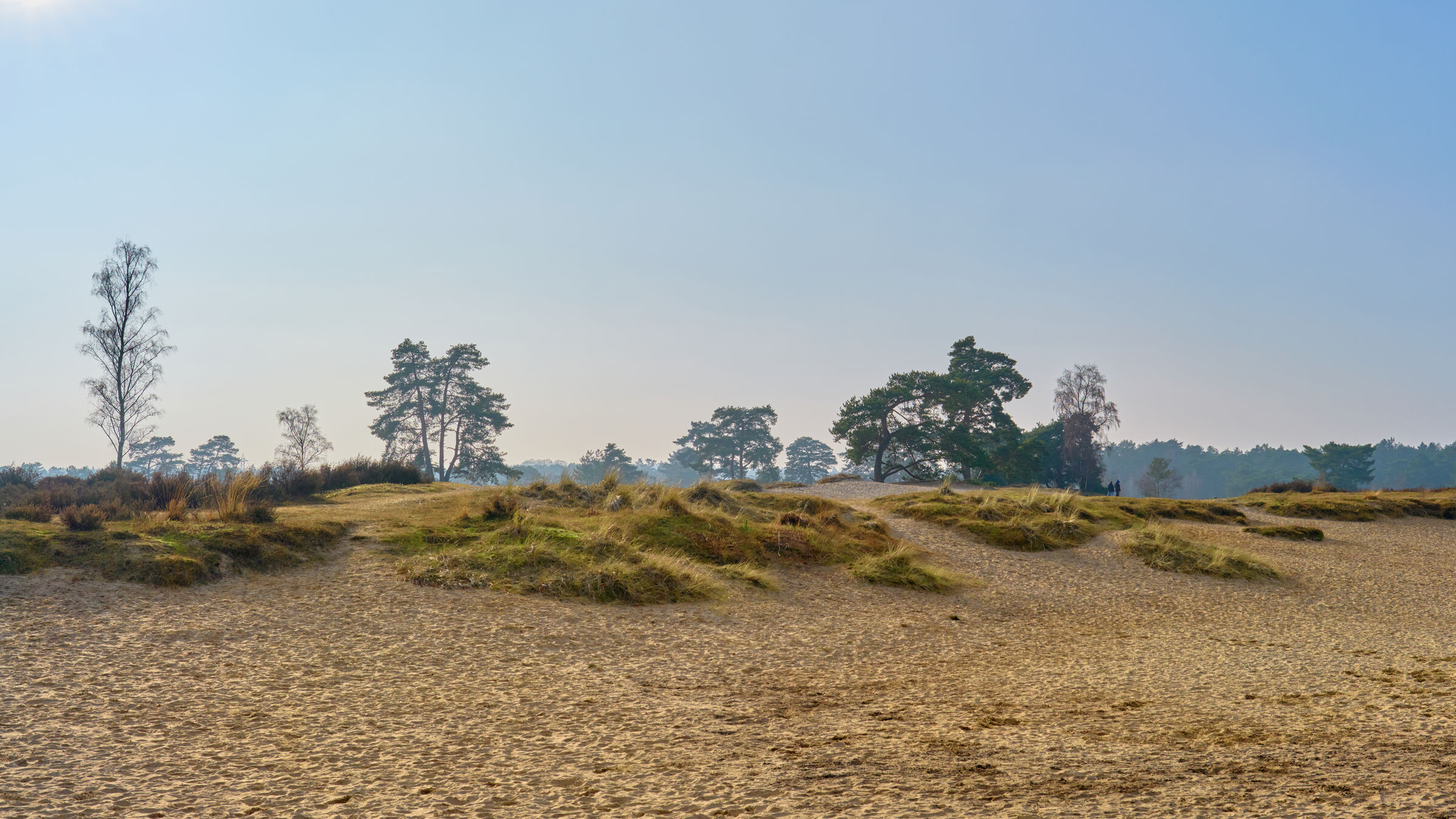
The trees in Soestduinen are mostly pines: dark green, often windswept, sometimes in small clusters on the crest of a dune, sometimes a single gnarled pine standing alone. Birches and other trees show up as well, and in places only bare branches are visible against the sky. They are survivors rather than decoration — part of the texture of the place.
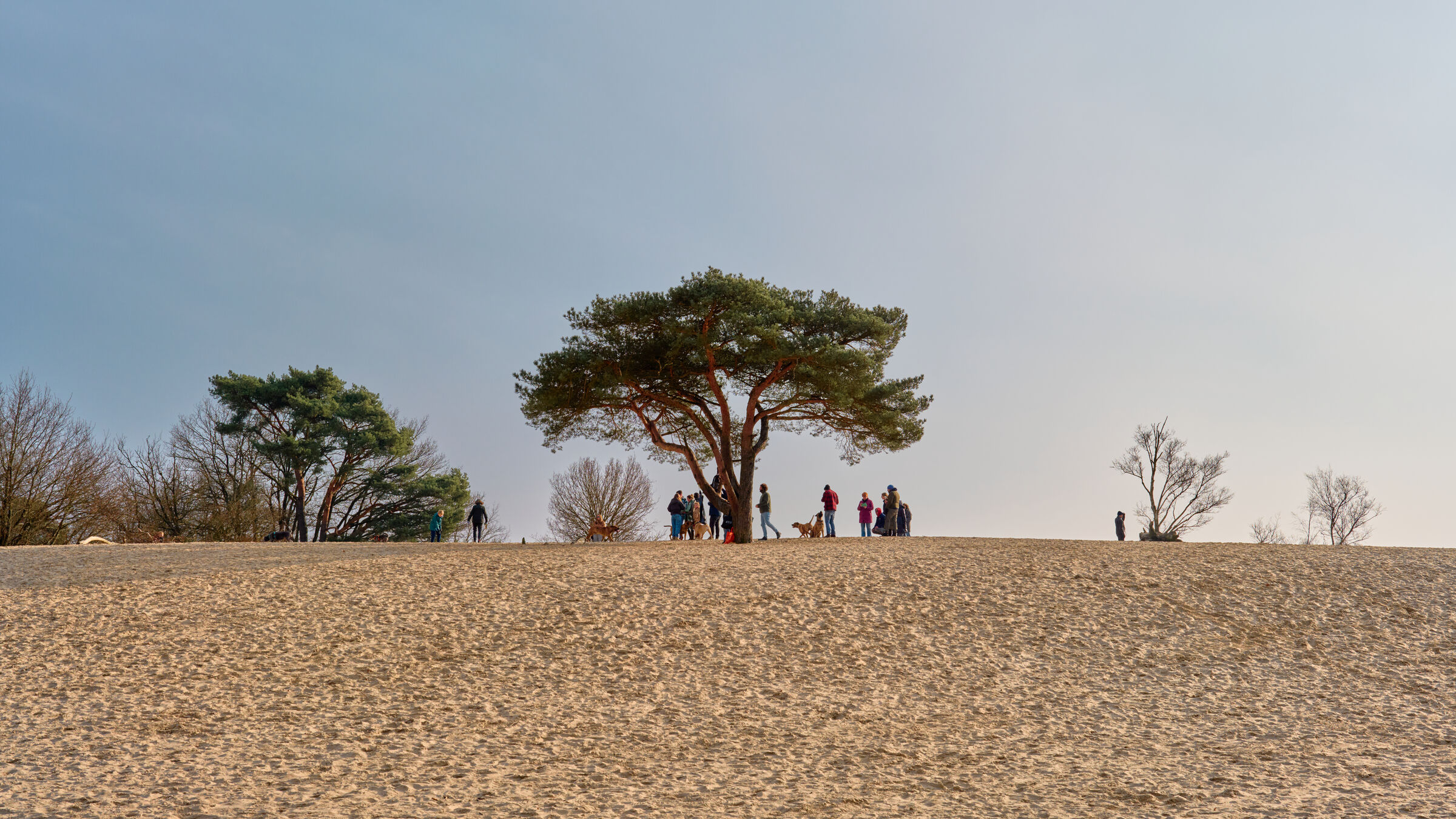
People are present but not central. Small figures on the crest of a dune, walkers on the paths, a group with a dog near a big pine, or just footprints in the sand. They give scale and a sense of use: this is a place people pass through and pause in, without dominating the view.
Soestduinen as Subject
I went to Soestduinen first because I just wanted to explore it myself, and second because I saw it as a nice opportunity to test my new lens — the Sigma 35mm ƒ/1.2 DG II Art — paired with my Leica SL3.
The place works well as a subject precisely because it feels like an exception: sand and wind and spare vegetation in a country that elsewhere is so managed. That contrast is not so much explained as shown — the shapes of the dunes, the light, the trees, and the occasional figures — so that the “quiet anomaly” is something a viewer can see in the pictures.
Read next: