Portraits of Concrete
Portraits of Concrete is a selection of architectural photographs exploring structural form, shape and texture. The series captures iconic — and less known — buildings across the Netherlands, primarily in Amsterdam, examining how they visually address the public and embody social class, historical periods, and shifting urban ideals.
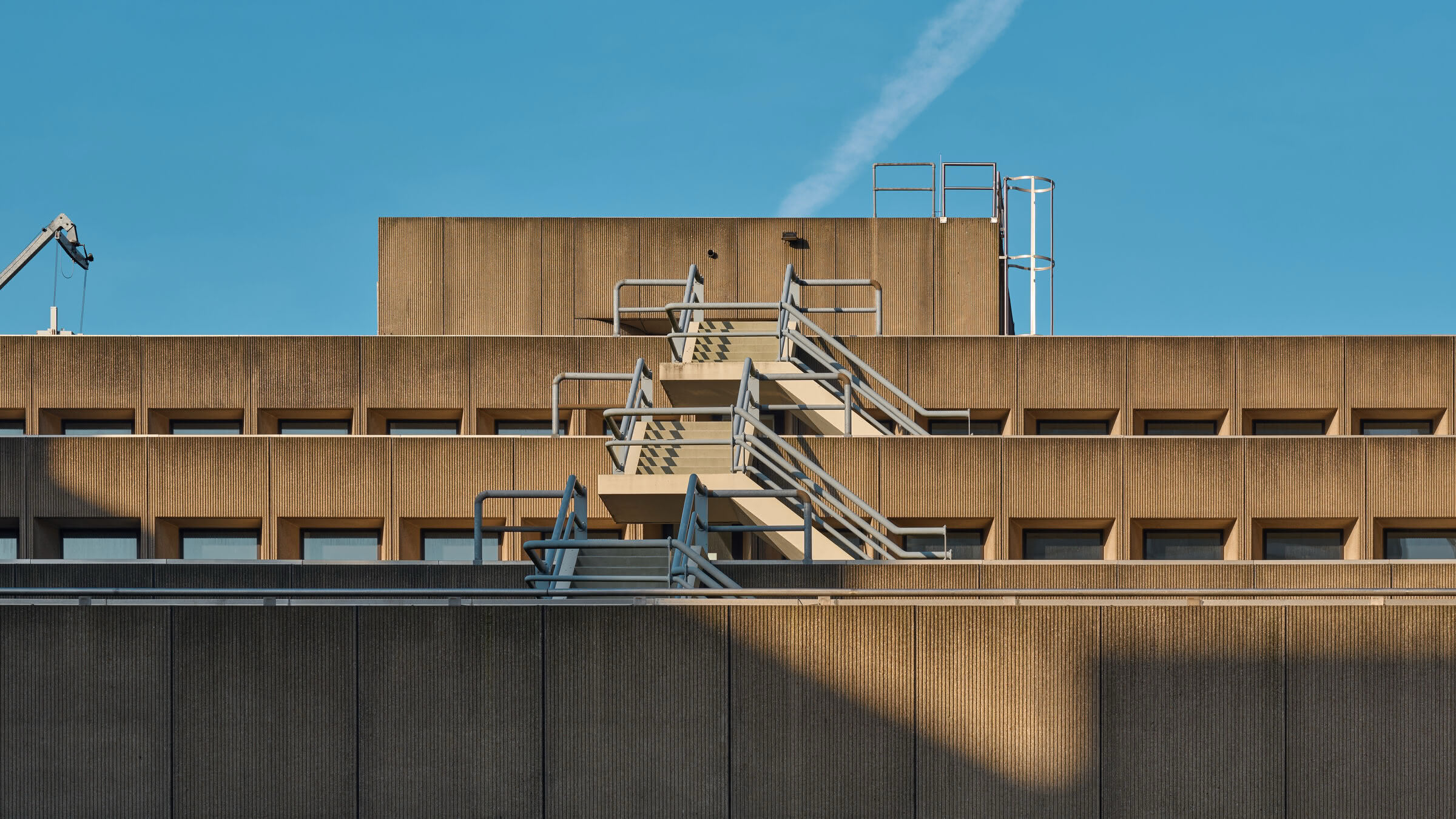
The series is built on structure and surface: curved facades, stepped terraces, cantilevered balconies, circular car parks, and towers with strict grids of windows. Concrete appears raw or sculpted, brick in red or beige, glass in blocks or panels, and metal in vents and railings. Light does a lot of the work — golden hour on an industrial facade, a diagonal shadow across a staircase, tree shadow on a wall, windows reflecting the sky. The same interest runs from a parking garage to the Valley towers and the Rembrandt Tower at Amstelplein: how mass and line and light resolve into form.
The Famous and the Forgotten
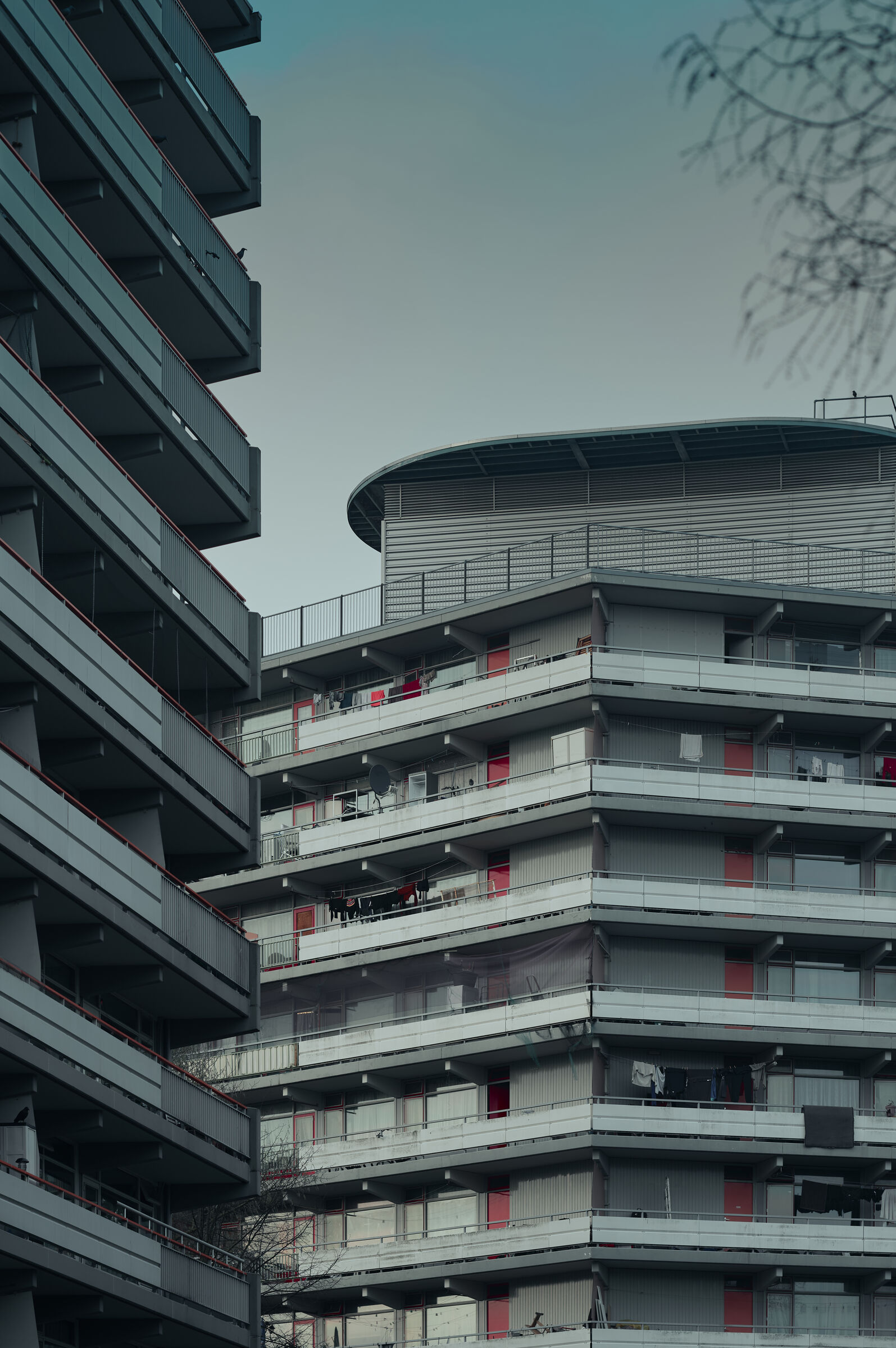
Some buildings are landmarks. The Valley, the Rembrandt Tower, the Amstel tower as the tallest residential block in Amsterdam, the city hall in Deventer — they’re named, recognisable, and often shot against a clear blue sky. Others are anonymous: a big concrete parking garage in Amsterdam, silver vents on a rooftop, a grey block with laundry on the balconies in Bijlmer. The series holds both. It doesn’t only collect icons, it treats the everyday structure as a subject too, and in doing so it touches on how different buildings address the city: some as statements, some as background.
In many cases, photos show housing. Balconies repeat — with greenery, with laundry, with red doors or red frames — and so do entrances, paths, and the odd person or bicycle. “Concrete neighbours” in Bijlmer, a residential block near Spaklerweg, an apartment complex near Kaaiennest with a distinctly brutalist feel, a building on Haveneiland that recalls the Flatiron. Social class and urban ideals show up in that mix: not as a lecture, but in the choice of what gets a portrait — the mansion, the tower, the social housing, the awkwardly beautiful parking structure.
Reading Buildings
Portraits of Concrete is about looking at buildings as form and as meaning. It uses concrete and structure as the common thread, and moves between iconic and ordinary, office and home, raw and refined. By giving the same attention to a landmark and to an everyday garage or block, it lets the viewer feel how architecture carries social class, period, and ideals — and how a curious eye can read that in the shape of a balcony, the line of a shadow, or the face of a tower.
Read next: